Spring violets feed pollinators!

How to save the world with plants #03 by @cast-iron-garden.bsky.social

Native violets are a key food in early spring.

Shade-loving perennial wild violets
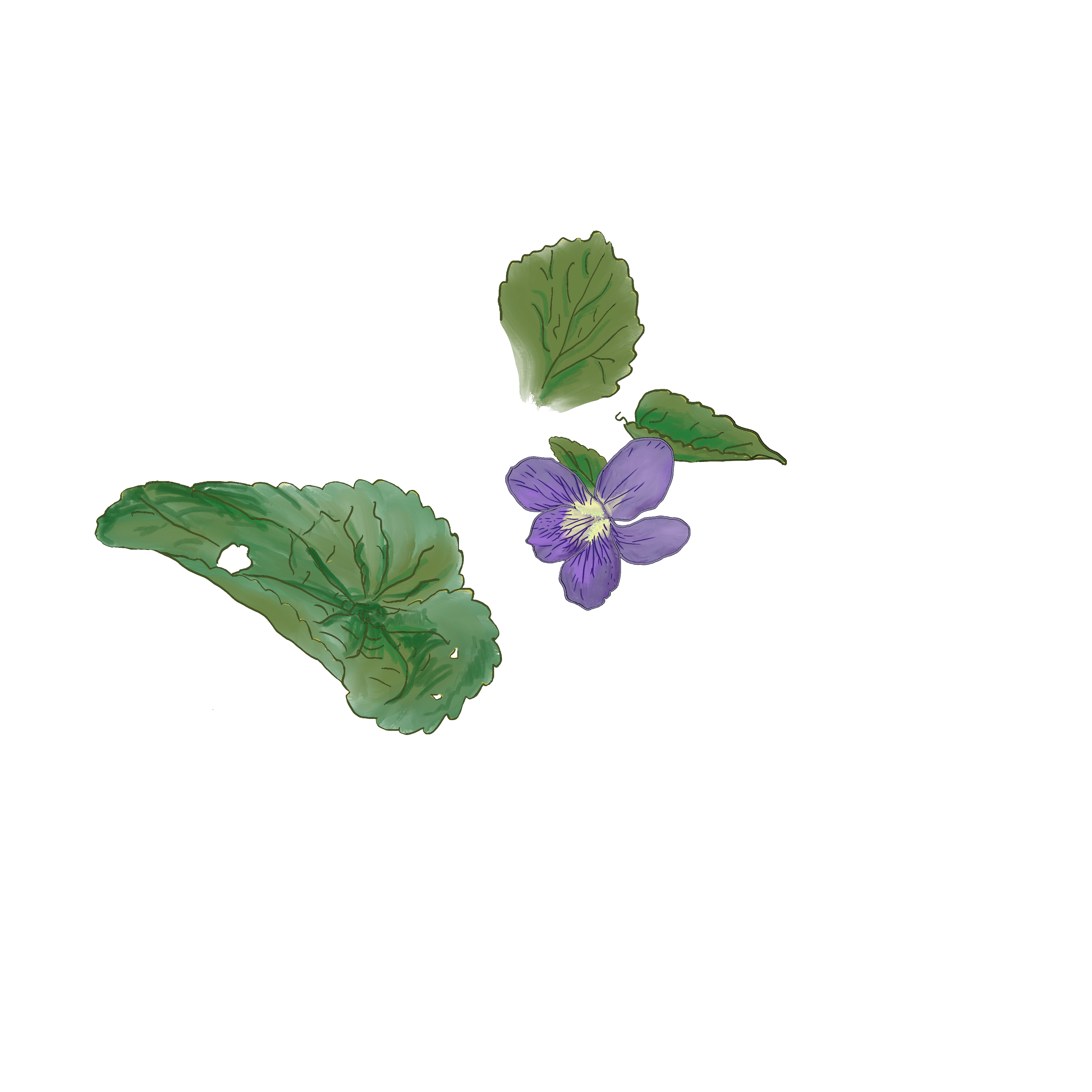
A blooming wild violet. The flower has five purple petals, with three of them having a darker purple. The center of the flower is light chartreuse; two petals facing the center have a series of light yellow bristles. The leaves are dark green and heart-shaped with gently serrated edges.  One leaf has three small holes nibbled in it.  This is a digital drawing made by hand from a photograph taken on March 3, 2026, in the author's yard.

A native wildflower, the perennial wild violet (Viola sororia)

Viola sororia (a.k.a. Viola missouriensis)

  • Common volunteers in shady and part-sun yards
  • Can grow in pots
  • Big clumps can be divided

Sun-loving annual wild violets
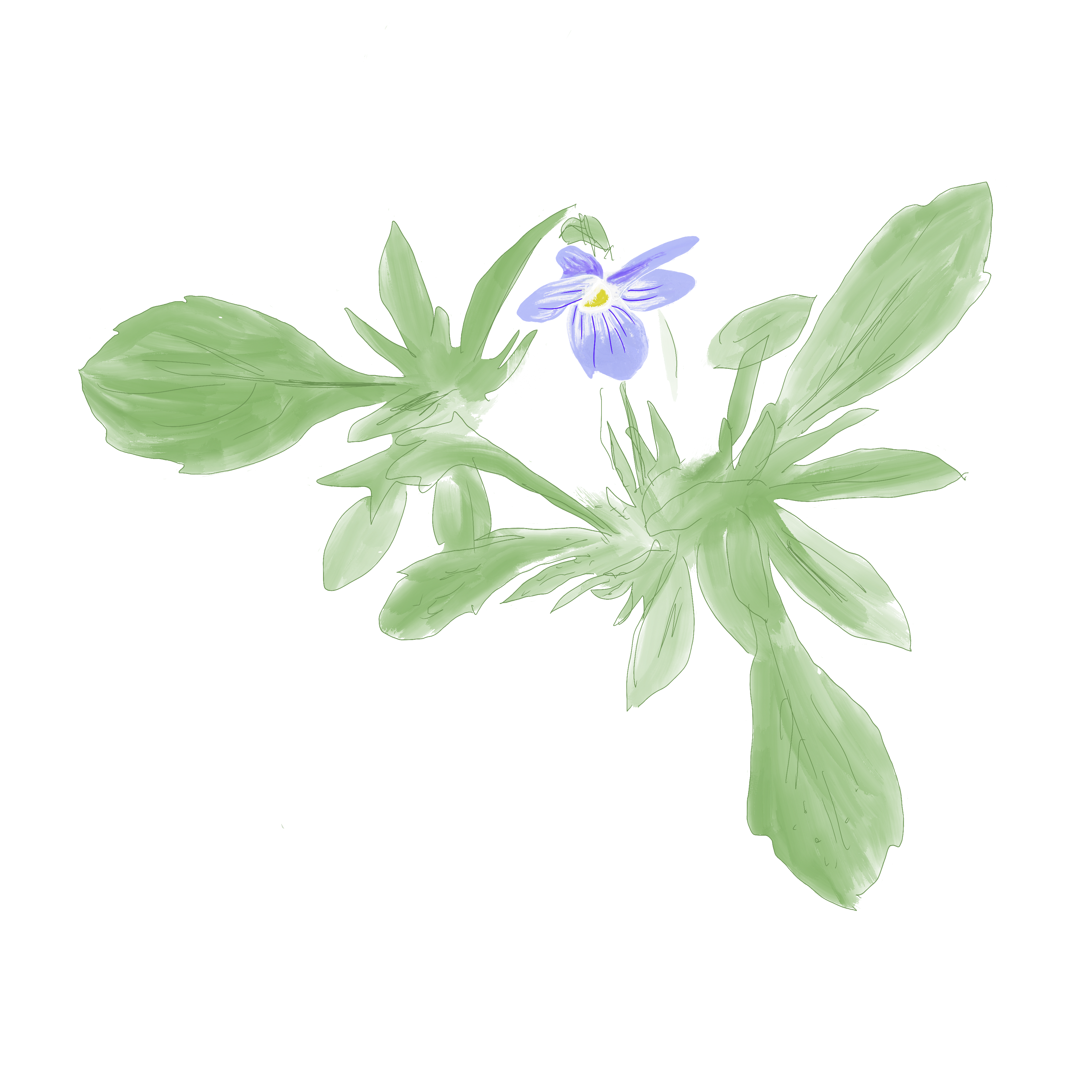
A blooming annual wild violet. The flower has five petals, with two tilted up and three facing down to create a platform for any pollinators.  The petal color is very pale lavender with darker stripes, and a pale yellow wash fades out from the center.  The leaves are thin with few teeth along the edge, and near the base of the leaves are thinner pointier leaves in clusters. This is a digital drawing made by hand from a photograph taken on March 3, 2026, in the author's yard.

A native wildflower, the annual wild violet (Viola rafinesquei)

Viola rafinesquei (a.k.a. Viola bicolor).

  • Full sun, sandy, recently disturbed soils

  • Done for the season in late April (compatible with vegetables and later flowers)

Why should I keep or add these to my yard?
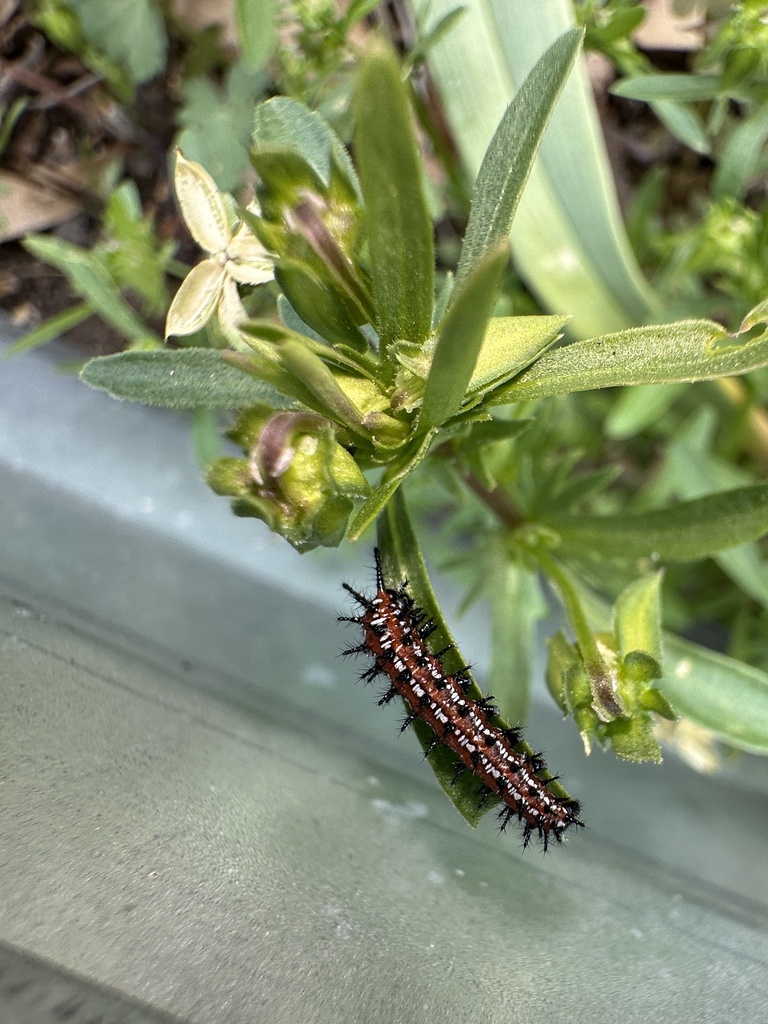
An orange striped caterpillar with black spines and white spots by each spine, sitting on the long green leaf of an annual wild violet that is going to seed.

A Variegated Fritillary caterpillar eating an annual wild violet leaf.

Violets feed the caterpillars of a butterfly called the Variegated Fritillary (Euptoieta claudia).

  • Declining in our region: one of our most common butterflies is in trouble!

  • They eat other plants too, but violets are up earliest.

QR code that lands directly on the violets page for the Cast Iron Garden website

Learn more, such as where to get native violets, at cast_iron_garden.codeberg.page or scan the QR code!
Back to top